


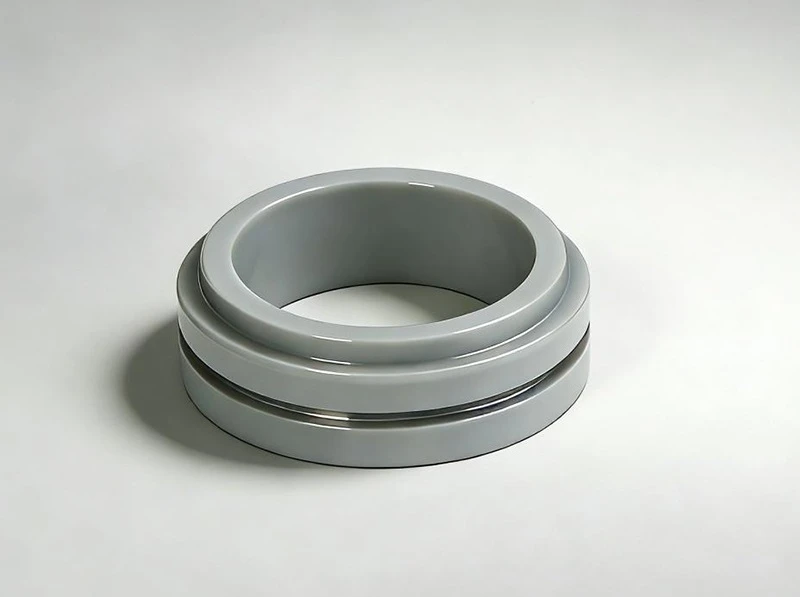
| Zirconia Ceramic-Coated Valve Seats | ||
| Size Range | 1/2" to 56" (Custom sizes available) | |
| Pressure Rating | PN10-PN420 (Class150-2500) | |
| Body Material | A105, A350 LF2, A182 F304, A182 F316, A182 F321, A182 F51, A182 F53, A182 F55, A182 F60, A182 F44, A564 630 (17-4PH) INCONEL625, INCONEL718, INCONEL825, Monel 400, Monel 500 etc |
|
| Core Process/Coating | ENP,HCR,STL6, STL12, STL20,Cr3C2, WC-Co, WC-Cr3C2-Ni, TiC-NiMo, SiC, CrC,ZrO2, Al2O3, Cr2O3, ZnO, TiO, Al2O3-TiO2,STL1, STL6, STL12,Ni60, Ni55, Ni45 etc. | |
| Operating Temperature Range | ≤1200°C | |
| Parameter Category | Core Technical Parameters | Standards for Determining Advanced Technological Level |
| Machining Seat accuracy | ≤ 0.025 mm | ≤ 0.005 mm (Ultra-High Precision) |
| Processing Seat Roundness | ≤ 0.025 mm | ≤ 0.011 mm (Micron-Level ) |
| Seats concentricity | ≤ 0.025 mm | ≤ 0.005 mm (Ultra-High Precision) |
| Other supplements | ≤ 0.4 μm | ≤ 0.1 μm (Mirror-Level) |
| Parameter Category | Core Technical Parameters | Criteria for High-End Technical Level |
| Coating Thickness Control | Thickness Uniformity | Thickness deviation at any spherical position ≤±8% (stricter than the general ±10% standard) |
| Thickness Tolerance Range | 100 - 300 μm (common range for wear-resistant layers); special ranges can be noted. No missed spraying for ultra-thin coatings (<10μm) | |
| Coating Adhesion Performance | Surface Hardness | HV 1300+ |
| Bond StrengthBond Strength | ≥80 MPa | |
| Interface PorosityInterface Porosity | <0.5% | |
| Coating Surface Quality | Surface Roughness (Ra) | ≤0.2 µm |
| Spraying Accuracy (Positioning & Coverage) | Spraying Positioning Accuracy | ±0.1mm |
An Innovative Surface System Designed for High Thermal Stress and Electrochemical Environments
We utilize advanced plasma spray or HVOF technology to apply a dense, firmly bonded zirconia ceramic coating onto the valve seat substrate, creating a new generation of industrial components with unique functionalities.
The Ability to Withstand Extreme Temperature Fluctuations
Zirconia ceramic possesses outstanding thermal shock resistance (Thermal shock resistant zirconia valve seats) due to its unique transformation toughening mechanism. It can withstand rapid transitions from high to low temperatures without cracking-a feat many other ceramics and even metals struggle to achieve. Therefore, as a high temperature Zirconia valve seat, it is particularly suited for fast-cycling high-temperature valves, processes involving periodic heating and cooling, or applications subject to direct impingement by high-temperature media.
Superior Thermal and Electrical Insulation Properties
The value of an Insulating zirconia ceramic valve seat lies in its dual-isolation function: its very low thermal conductivity effectively blocks heat transfer from hot media to the valve body and downstream piping, protecting sealing elements and support structures. Concurrently, its inherent high electrical resistivity can effectively break electrochemical corrosion circuits, providing critical protection in systems prone to stray currents or requiring prevention of galvanic corrosion.
Broad Resistance to Corrosion and Wear
Zirconia Coated valve Seats exhibit excellent chemical inertness to most strong acids, alkalis, and molten metals. Combined with their high hardness, this makes them resistant to both corrosion and a degree of wear. Consequently, Zirconia ceramic-coated ball valve seats become an ideal choice for addressing combined thermal, corrosive, and wear challenges in chemical processing, metallurgy, high-end laboratory equipment, and semiconductor handling systems.
Why Choose TongBall's Zirconia Ceramic-Coated Valve Seats?
Addressing Fundamental Thermal Limitations of Traditional Materials
When thermal shock cracking and heat conduction are primary failure modes, zirconia coating offers a fundamental solution, not a compromised workaround.
Multi-Functionality Integrated into a Single Design
A single material layer simultaneously provides thermal shock resistance, thermal insulation, electrical insulation, and corrosion resistance, simplifying system design and reducing the need for complex engineering measures to achieve multiple protective goals.
Advanced Coating Deposition and Finishing Techniques
Through precise control of coating porosity, phase composition, and bond strength, we ensure coating stability under long-term thermal cycling. Precision grinding then achieves the surface finish required for demanding sealing applications.
Application of Forward-Looking Material Science
Zirconia ceramic represents the forefront of surface engineering for extreme environments. Adopting this technology means equipping your systems with forward-looking capabilities for even more demanding future operating conditions.
When thermal stress and electrochemical environments jointly test the limits of a valve, material innovation is the only path forward. TongBall's Zirconia Ceramic Coating Technology does more than merely add a protective layer; it fundamentally redefines the interface between the valve seat and extreme thermal, electrical, and chemical environments, opening a new dimension of high-reliability, long-life valve design for you.
Hot Tags: zirconia ceramic-coated valve seats, China zirconia ceramic-coated valve seats manufacturers, factory, Titanium Coated valve Seats, Zirconia Ceramic Coated Valve Seats, Chemical resistant alumina ceramic valve seats, Insulating zirconia ceramic valve seats, Titanium oxide coated valve seats industrial, Corrosion proof chromium oxide coated valve seats


